


On a windswept island at the edge of the Southern Ocean, two women met while studying sea lions. What began as an expedition to Campbell Island became something more enduring: a partnership rooted in shared purpose, trust, and joy in the work of conservation.
Dr. Mary-Anne Lea and Dr. Kimberley Vinette Herrin—two leaders in marine science—spoke candidly at a recent Women for Wildlife panel hosted by Taronga Zoo about the lessons they’ve carried from those early days.
“You can’t just fling anyone together and expect it to work,” one of them said, reflecting on the value of connection. “Getting to know people and finding out where that connection is… that has to happen organically. Sometimes it takes time. Or you need big events where you have a chance of meeting those people.”
The panel, part of Taronga’s Women for Wildlife initiative, was less a lecture than a testament to resilience—of species, ecosystems, and the people working to protect them. The conversation traced the accelerating threats facing marine life, from penguin colonies collapsing under climate stress to sea lion pups navigating increasingly hostile coastlines. But it also offered something rarer: a glimpse into the emotional and collaborative lifelines that sustain conservationists through work that often feels overwhelming.
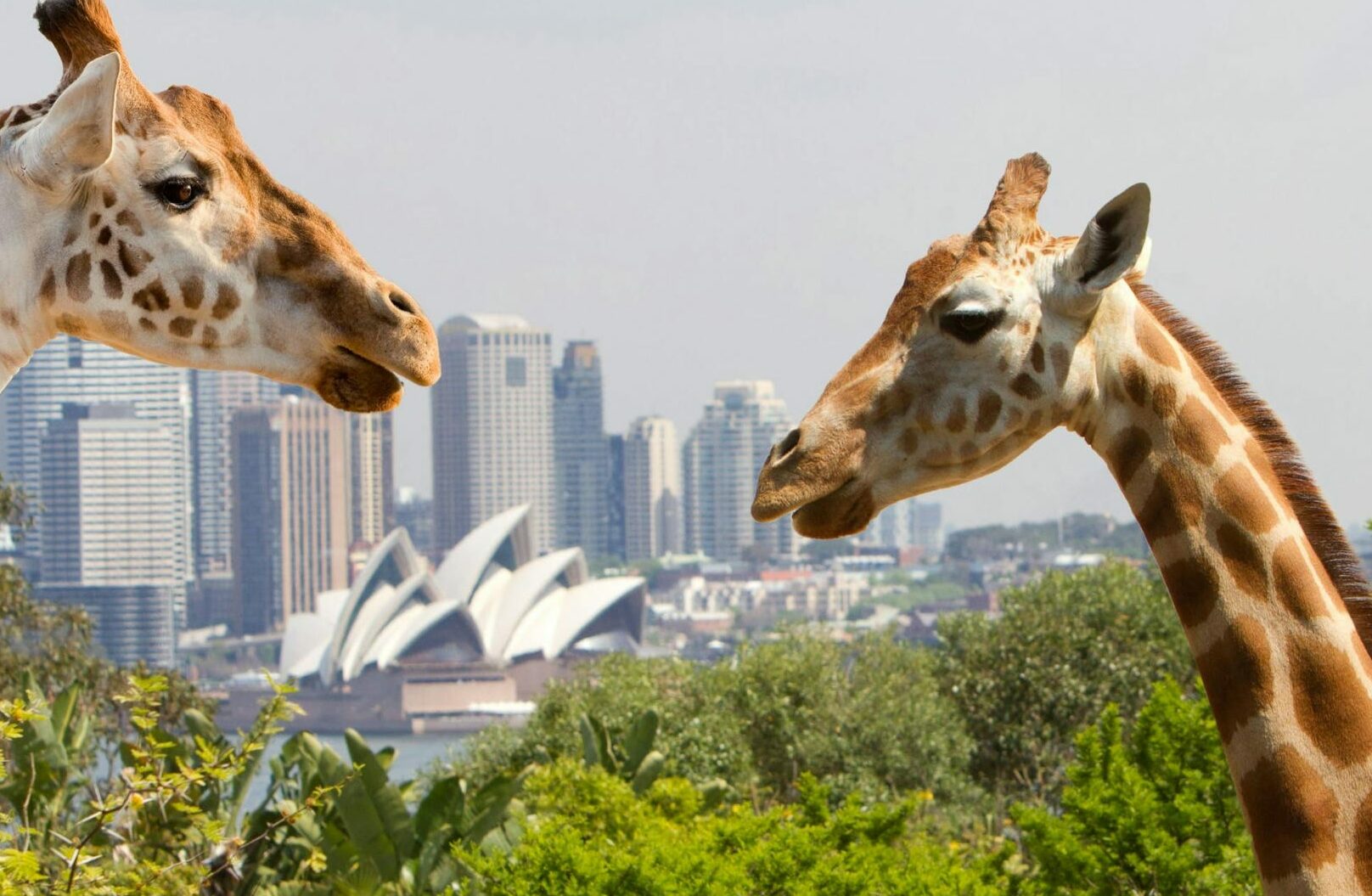
Two of Taronga Zoo’s resident giraffes enjoying the view — with Sydney’s iconic Opera House standing tall in the background. A reminder of how wildlife and city life exist side by side.
From Penguins to Policy: Why Intervention Matters
For decades, conservation orthodoxy held that wild populations should be left alone—that nature should unfold without interference. Today, that view is no longer tenable.
“It’s only, as you would all know, 10 years ago or so, you couldn’t really do interventions in the wild,” Dr. Lea noted. “Now, we make strong interventions in many cases in order to assist those species to be climate resilient or to overcome a discrete threat.”
Examples abound: constructing ramps to save stranded sea lion pups, protecting penguin nests from erosion, and developing agile, targeted solutions to rapidly changing conditions. These interventions are born of necessity, but they also signal a deeper shift in conservation philosophy—one that acknowledges both the agency and fragility of species adapting to ecosystems in flux (Ripple et al., 2017).
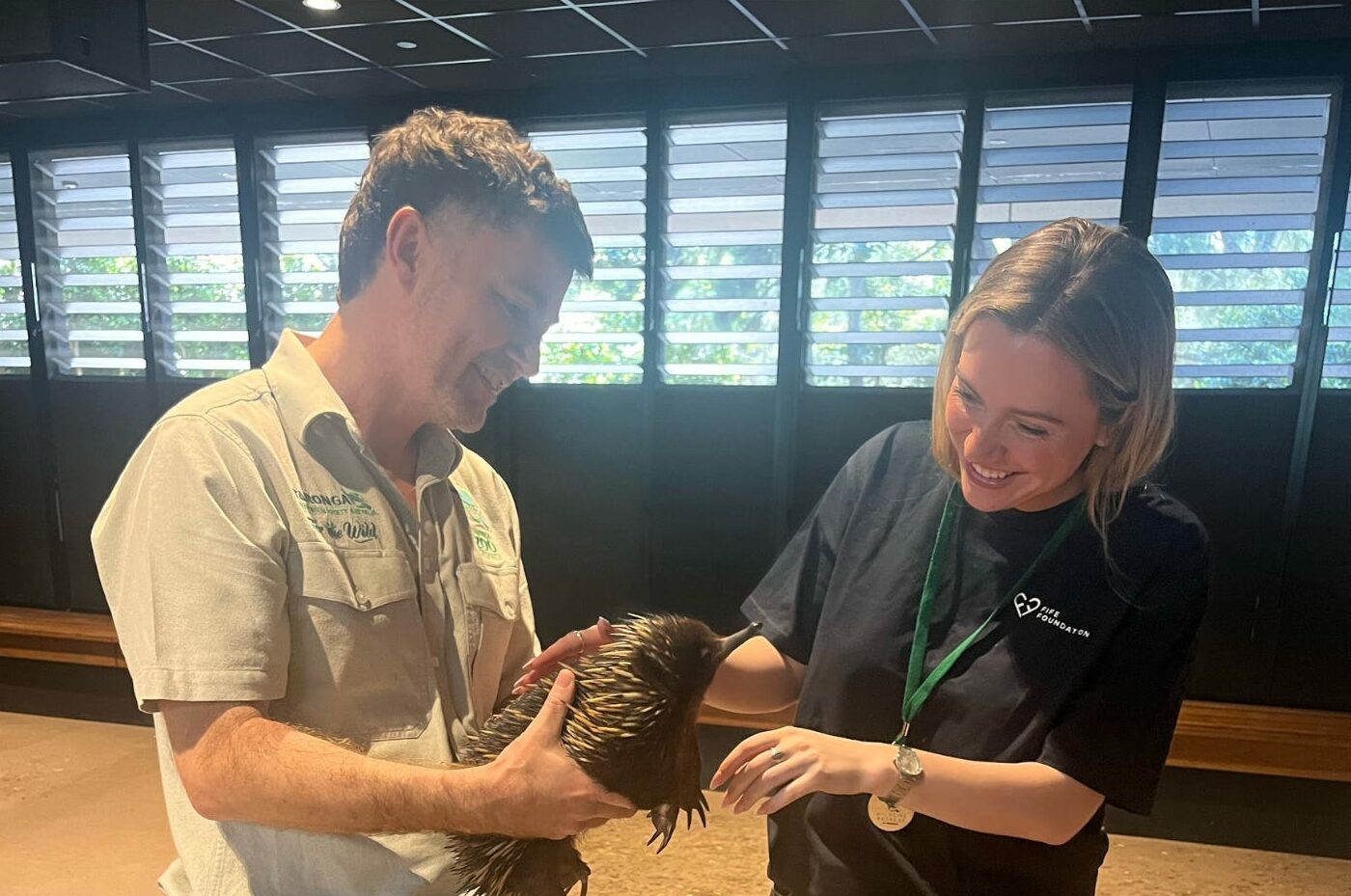
Georgia getting up close with one of Taronga Zoo’s echidna residents, guided by a zookeeper. Moments like these bring conservation and education to life, connecting people with the animals they strive to protect.
Collaboration as Conservation
Beyond science, the panelists emphasized the irreplaceable role of human connection. Conservation, they argued, is not the solitary pursuit of data, but the collaborative weaving of disciplines—veterinary medicine with ecology, law enforcement with marine biology, Indigenous knowledge with cutting-edge technology.
The Women for Wildlife initiative exemplifies this ethos. Recent projects include funding the Wild and Force Initiative, a breakthrough collaboration with the Australian federal government that uses advanced scanning technologies to detect smuggled wildlife parts. The project has already led to two major arrests, including an individual who evaded justice for three decades. Such work is not only scientific, but social—a reminder that conservation requires coalitions as much as research (Sandbrook et al., 2019).
As one panelist put it, “Everyone has a part in this, and everyone can actually make a difference, no matter how small it is. That all adds up and helps support conservation.”
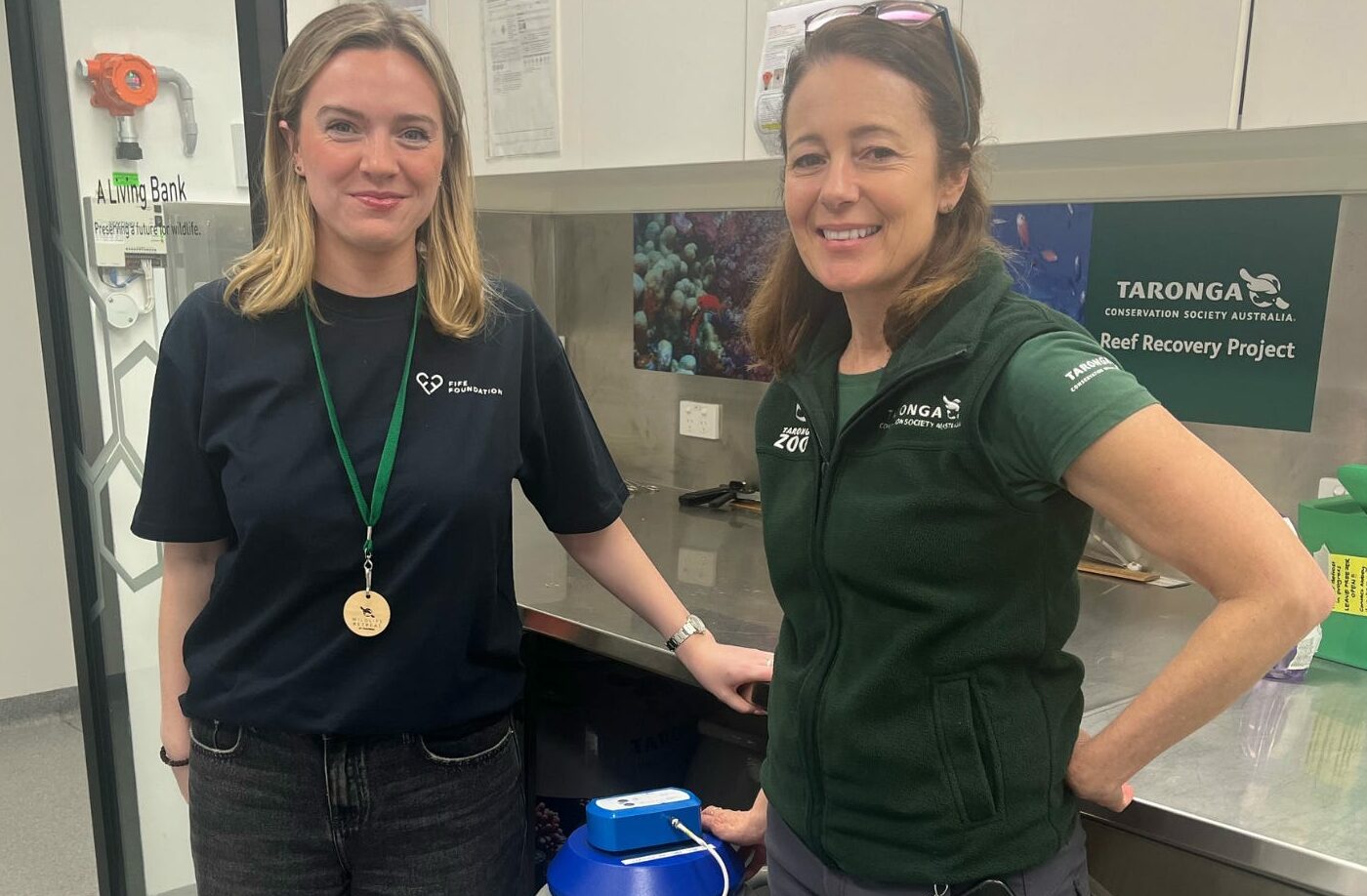
Georgia and scientist Dr. Justine O’Brien in the lab, looking at the Cryo-Diversity Bank equipment—a behind-the-scenes glimpse into the technology helping to preserve species for future generations.
Building for the Future: Taronga’s Vision
The conversation also highlighted Taronga’s Capital Works and Conservation Technology program. Led by Rebecca White, one of seven female project managers on a nine-person team, Taronga is reshaping what conservation infrastructure looks like.
Among their most ambitious projects is the Wilder Wildlife Hospital, set to become Australia’s first specialized veterinary teaching hospital. Designed with marine tanks, public viewing spaces, and advanced diagnostic equipment, the facility embodies a new philosophy: conservation as both science and education, where the public bears witness to the care that sustains wildlife.
Complementing this is the planned Sky Safari cable car—connecting Taronga Wharf to the zoo plaza—and the expansion of technology-driven conservation crime units. These projects are more than infrastructure; they are bridges between people and the ecosystems they are called to defend.
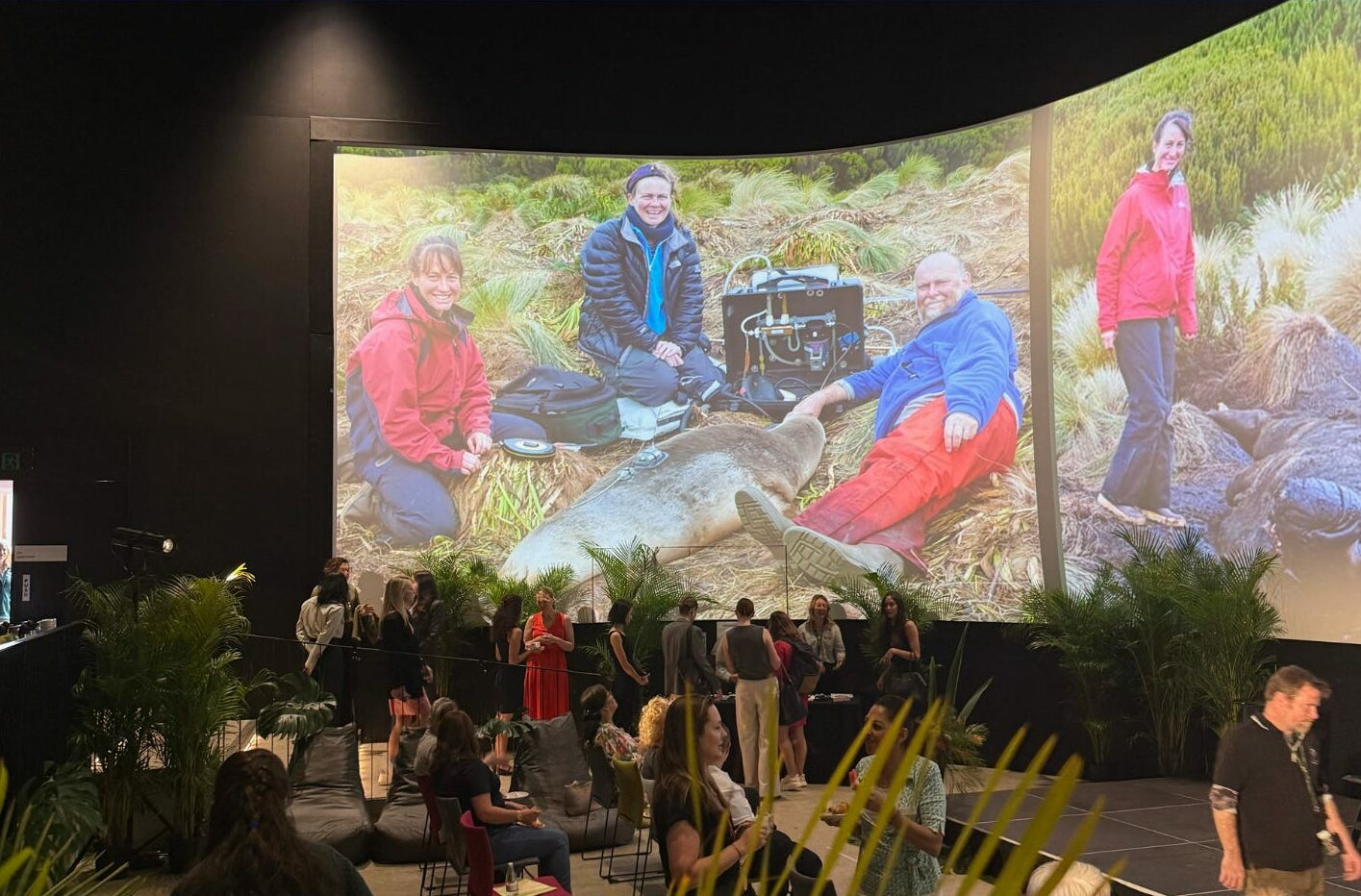
Snapshots from the panel discussion at Taronga Zoo, where experts shared insights on conservation, collaboration, and the importance of finding your “people”—those you connect with and share passion with to drive meaningful, exciting outcomes.
A Walk Through the Institute
As part of the event, we also walked through Taronga’s Institute of Science and Learning—a hub where students, scientists, and educators converge. The building itself reflects Taronga’s ethos: a model of sustainable design cooled and heated by ceiling louvres that track the sun, with carpets woven from recycled fishing nets.
Inside, three themed classrooms bring conservation to life. Two focus on native environments—woodlands and desert—while the third is an exotic classroom showcasing endangered species, featuring cotton-top tamarins and Indonesian birds. These spaces don’t just house animals; they invite children to learn about deforestation, habitat loss, and the urgent need for global stewardship.
The animals are given agency to interact or retreat, underscoring Taronga’s philosophy that personality matters. There is Edna, a 36-year-old echidna in semi-retirement, and a colony of bleeding heart pigeons whose striking plumage captivates young learners. Some animals live far beyond their wild lifespans, a testament to the care they receive.
defend.
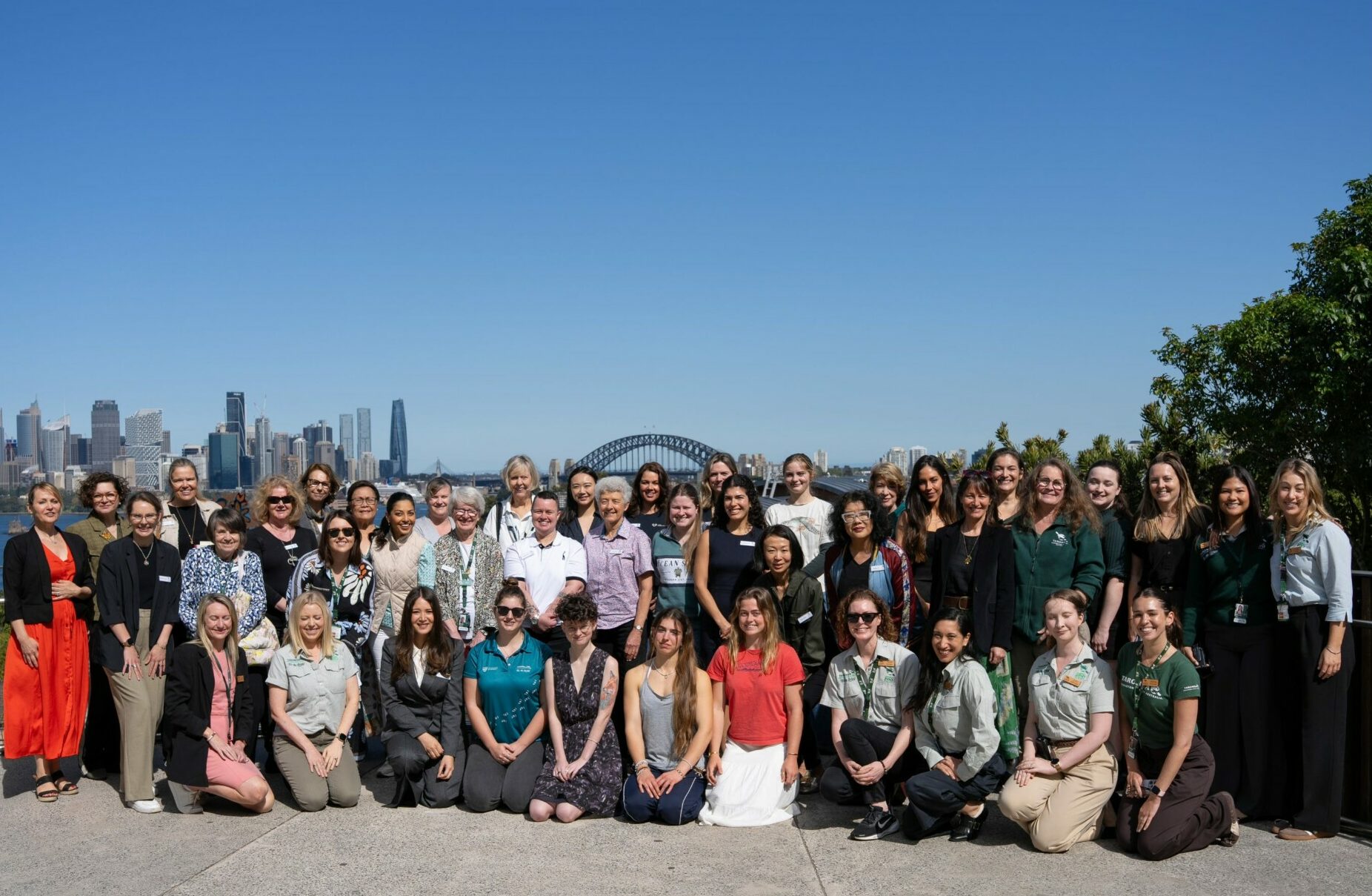
The Women for Wildlife collective gathered at Taronga Zoo — scientists, rangers, veterinarians, educators, and advocates united by one purpose: protecting the planet’s wild heart. Proof that when women come together in conservation, connection becomes its own kind of power.
Healing Reefs, Restoring Habitats
Taronga’s work extends far beyond zoo walls. The Reef Recovery Program partners with traditional custodians and scientific institutions to restore coral ecosystems across Australia. Using coral propagation and aquaculture, corals are raised in tanks for two weeks before being replanted on reefs.
A pioneering coral gene bank cryogenically stores coral sperm in liquid nitrogen, each sample carefully linked to its sea country of origin in line with cultural protocols. In Florida, researchers are even experimenting with freezing and recovering large Australian coral larvae—an innovation that could enable genetic mixing across regions, boosting resilience against climate change.
Parallel to this is Habitat Positive, Taronga’s flagship restoration initiative. Beginning with 5,000 hectares of critically endangered box gum woodlands in New South Wales, the project envisions scaling up to 2 million hectares by 2050. This effort integrates spatial modeling, scientific research, and First Nations knowledge to identify climate-resilient, biodiverse sites. Nearly a million seedlings are already growing in Taronga’s nurseries.
The project prioritizes cultural assessments, community-led land management, and Indigenous job creation, while restoring waterways for species such as platypus and frogs. By sharing its research openly, Taronga is setting new restoration benchmarks for Australia.
Meeting Maria Sykes: A Jane Goodall Legacy
Maria’s remarks underscored the urgency of her mission: saving chimpanzees from extinction while empowering the communities who share their forests. The Institute’s work spans habitat restoration, anti-trafficking enforcement, and community development, offering alternative livelihoods that reduce deforestation.
Education is central. JGIA is building a global environmental education program that is in desperate need of funding. They hope to partner with Up School to reach a quarter of Australian children within the next five years, but funding is critical. With $2–2.5 million, the initiative could scale sustainably—fostering eco-literacy and custodianship in a new generation. Stories of chimpanzee intelligence and Jane Goodall’s legacy ground this work in empathy and imagination, reminding us that conservation is ultimately about relationships—between species, between communities, and across generations.
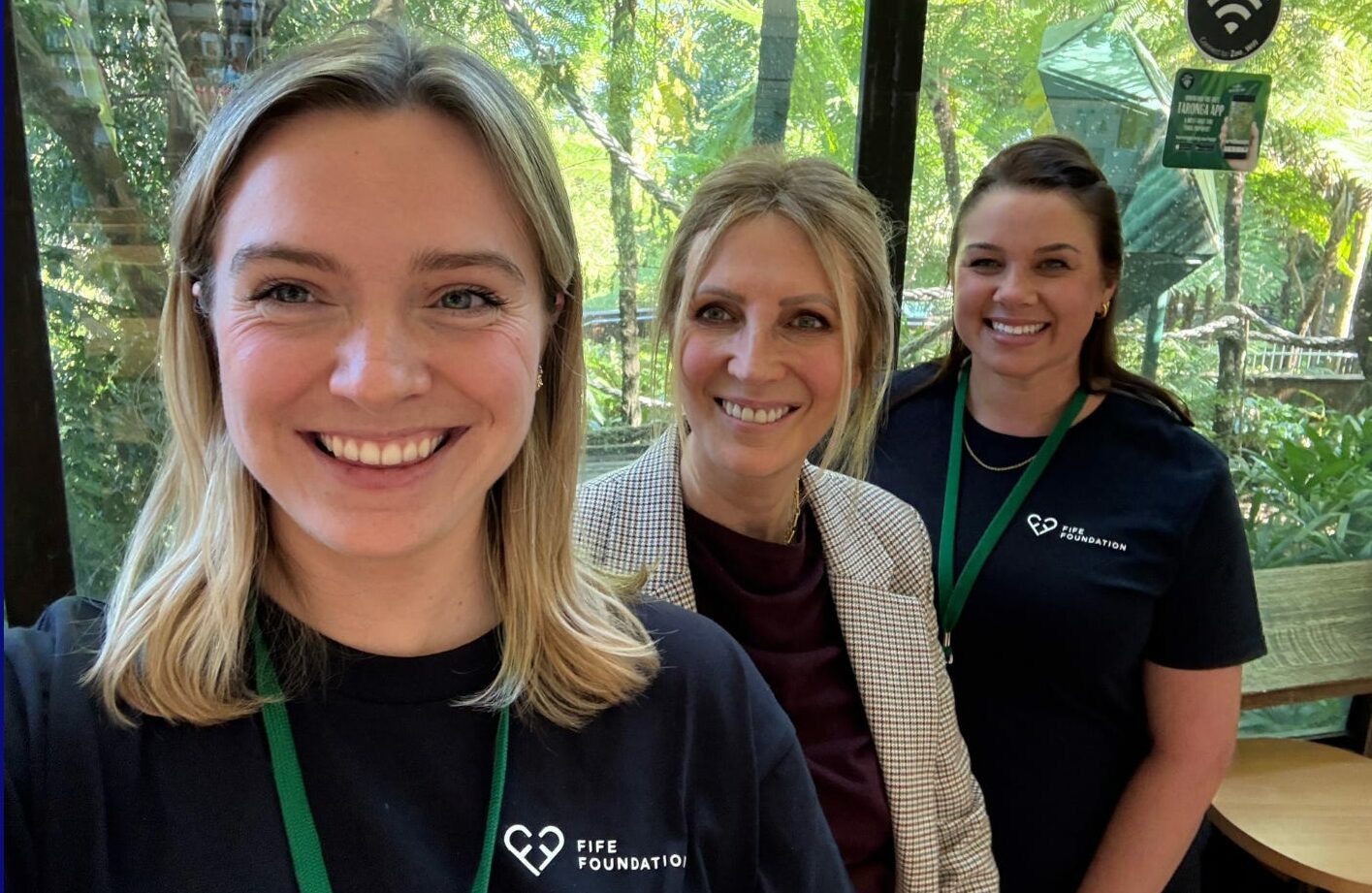
Maria Sykes, Chief Executive Officer of the Jane Goodall Institute Australia (JGIA), spoke with us during our time at Taronga Zoo. Her passion for protecting chimpanzees and empowering communities deeply inspired our team. [In the photo, from left: Fife Foundation’s Georgia and Janelle with Maria.]
Conclusion: A Call to Connection
As ecosystems shift and species struggle to adapt, the work of women like Dr. Lea, Dr. Vinette Herrin, Dr. Michelle Shaw, Rebecca White, and Maria Sykes reminds us that conservation is not only about protecting the vulnerable. It is about building communities of care, resilience, and purpose—whether on a remote sub-Antarctic island, in a coral reef, or a classroom filled with children discovering the bleeding heart pigeons for the first time.
At the Fife Foundation, we are proud to support and spotlight initiatives like Women for Wildlife. Because in the end, finding our “people”—and fighting together for the planet we share—may be the most important intervention of all.
If you want to support or connect with Taronga Zoo or learn more about Women for Wildlife, click the button below to explore their work.


