


This is the work of Counting Coral — a nonprofit that merges creativity and science to restore coral reef ecosystems. At the Fife Foundation, we are proud to partner with this extraordinary organisation. Their work reflects our shared values of sustainacreativity, and community stewardship.
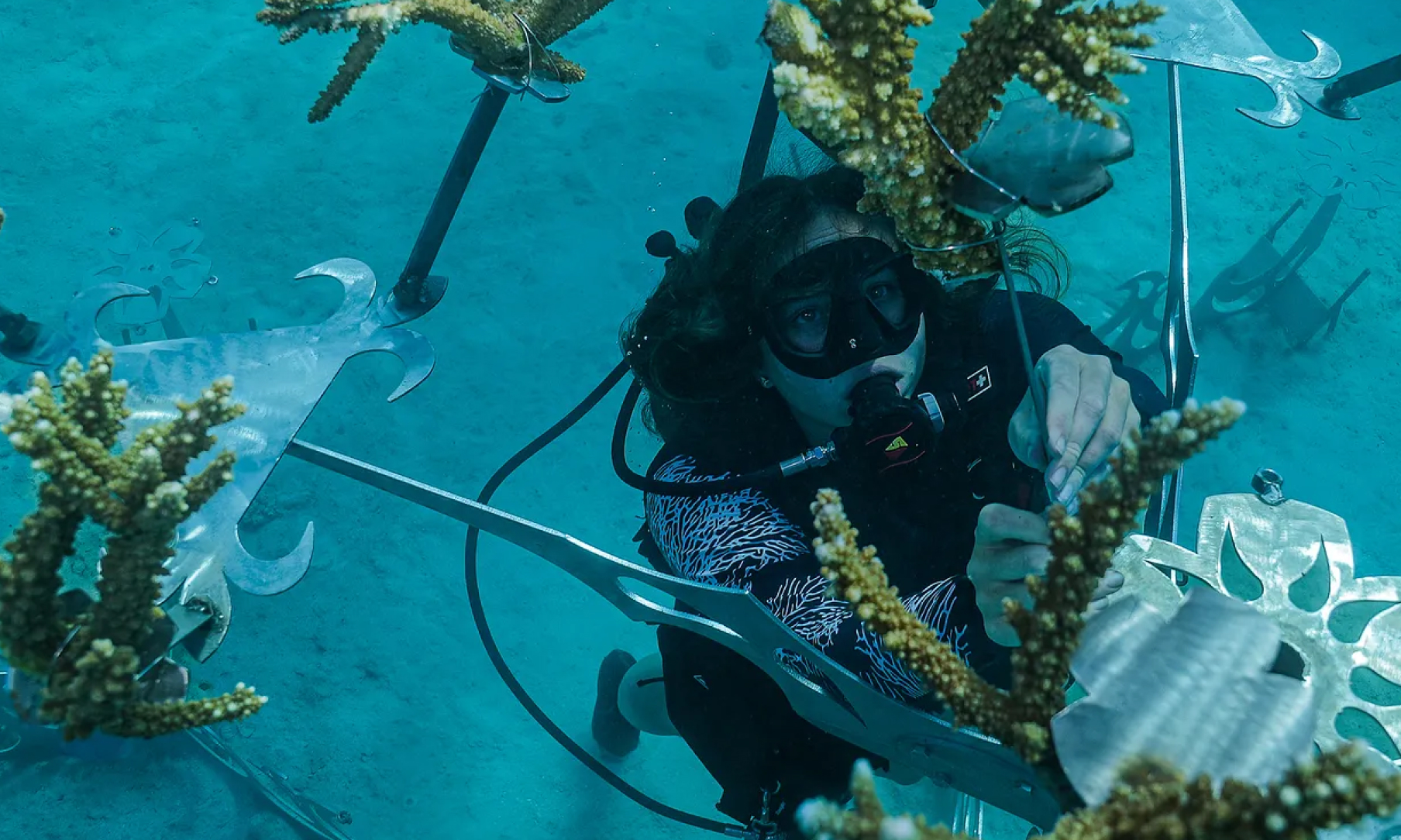
A Counting Coral diver steadies a sculpture on the ocean floor — where art, science, and stewardship meet beneath the waves of Fiji’s reef systems.
Beauty with Purpose: Sculptures That Save Coral
Counting Coral creates and installs sculptural coral gene banks — underwater art parks designed to host rare and resilient coral species. These structures, crafted from marine-grade stainless steel, function as Gene Banks for genetically robust corals, which are then used to propagate degraded reef systems. With time, these installations transform into vibrant, living ecosystems—artistic interpretations of an artificial reef (Rinkevich, 2014).
Unlike conventional restoration efforts that often rely on concrete or PVC structures, Counting Coral emphasises both ecological integrity and aesthetic appeal. Their materials avoid chemical leaching and degradation, providing a safer and more sustainable foundation for marine life (Baums et al., 2013).
These sculptural gene banks serve multiple roles: restoring coral cover, promoting biodiversity, reducing diver pressure on natural reefs, and attracting ecotourism revenue that supports local communities (Spalding et al., 2017).
Why coral, why now?
Coral reefs support an estimated 25% of all marine species and provide ecosystem services worth billions annually, including fisheries, coastal protection, and tourism (Moberg & Folke, 1999). However, they are among the most threatened ecosystems on the planet. Rising sea surface temperatures, ocean acidification, overfishing, and pollution have already caused massive degradation, with global projections suggesting that over 90% of coral reefs could be lost by 2050 without significant intervention (IPCC, 2019).
Counting Coral addresses this crisis not only through scientific restoration, but by reimagining conservation as an artistic, community-based, and regenerative act. Their model is rooted in a gene bank strategy that protects genetic diversity—a critical factor in coral resilience and adaptation (Hughes et al., 2017).
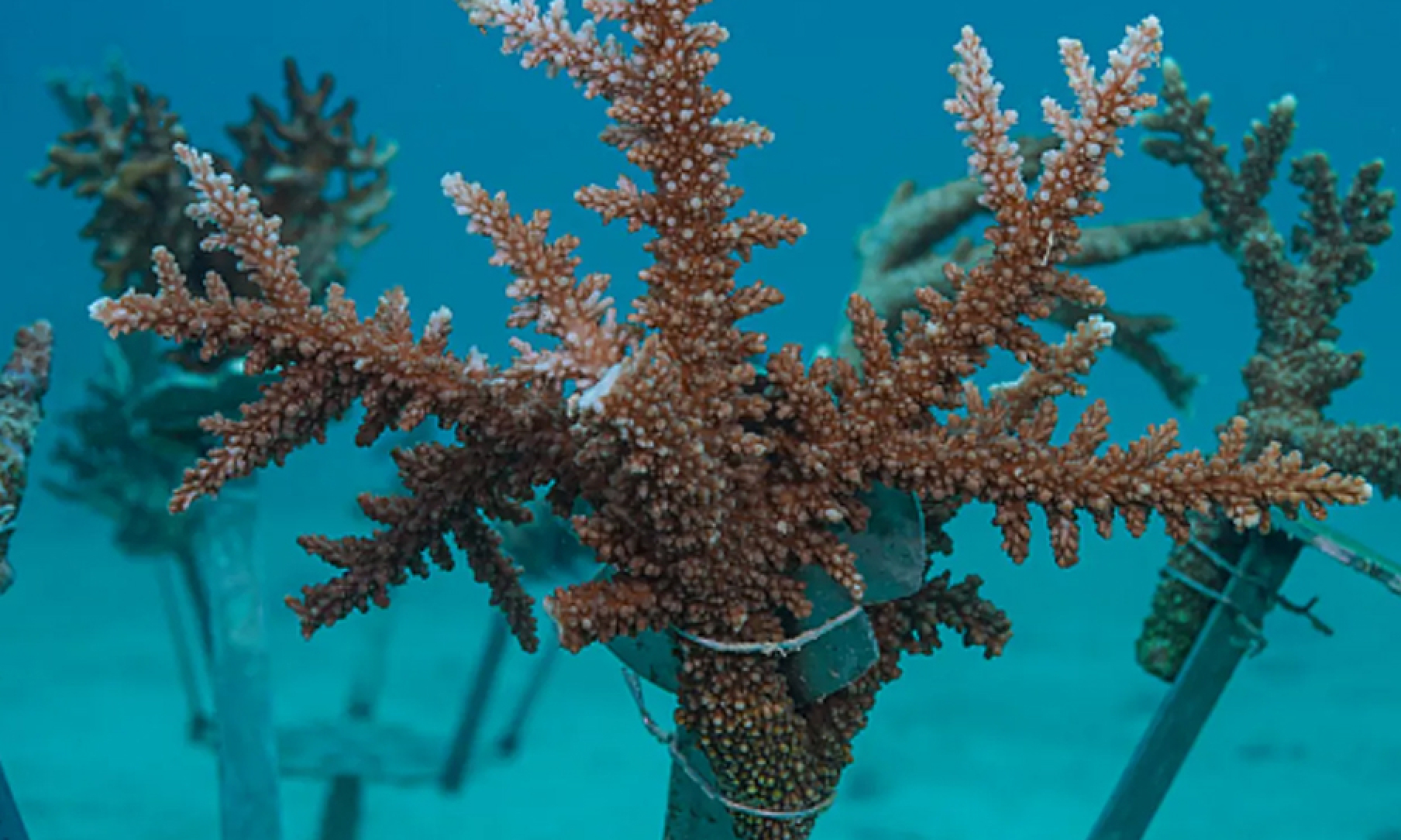
Coral fragment, now thriving on an underwater sculpture, is part of a living art installation restoring marine ecosystems, one polyp at a time
From Vision to Vibrancy: The Fiji Projects
In 2022, Counting Coral launched the world’s first Sculptural Coral Gene Bank at Blue Lagoon Beach Resort on Nacula Island. The project involved planting over 370 coral fragments sourced from eight surrounding reefs. These fragments were chosen for their resilience and diversity, creating a foundation for future coral propagation and reef restoration.
Building on this success, the organisation expanded to VOMO Island in 2024, installing a new sculpture park designed to host over 500 coral colonies. Each installation is custom-built and ecologically tailored to the reef site and community context.
These projects exemplify the growing movement toward site-specific, ecologically functional, and community-inclusive restoration (Edwards, 2010).
Gene banks have recently been installed at Fiji’s Castaway Island Resort and Waidroka Bay, with additional expansions of secondary nurseries now completed at Vomo Island. These initiatives are part of long-term projects, designed to continue growing and developing for decades to come.
Why This Work Resonates with Fife
At the Fife Foundation, we view philanthropy as a form of stewardship—not only of resources, but of imagination. Counting Coral exemplifies this ethos by demonstrating how ecological care can be both scientifically sound and emotionally compelling. Their work bridges the aesthetic and the ecological, reminding us that the health of the planet is not just a technical problem, but a cultural one.
By partnering with local stakeholders, integrating climate-adaptive strategies, and crafting visually arresting installations, Counting Coral inspires a deeper engagement with reef conservation. As philosopher Elaine Scarry (1999) proposed, beauty can sharpen our attention to justice. In that spirit, these sculptural parks do more than restore—they invite us to care.
Looking Forward
Together with Counting Coral, we look forward to supporting restoration initiatives that are collaborative, evidence-based, and designed to endure. Their sculptural gene banks are more than installations. They are regenerative spaces where science, culture, and community converge.
In a warming world, these works of underwater art are not merely symbolic. They are critical infrastructure for ecological survival. We are honoured to help share this vision.


